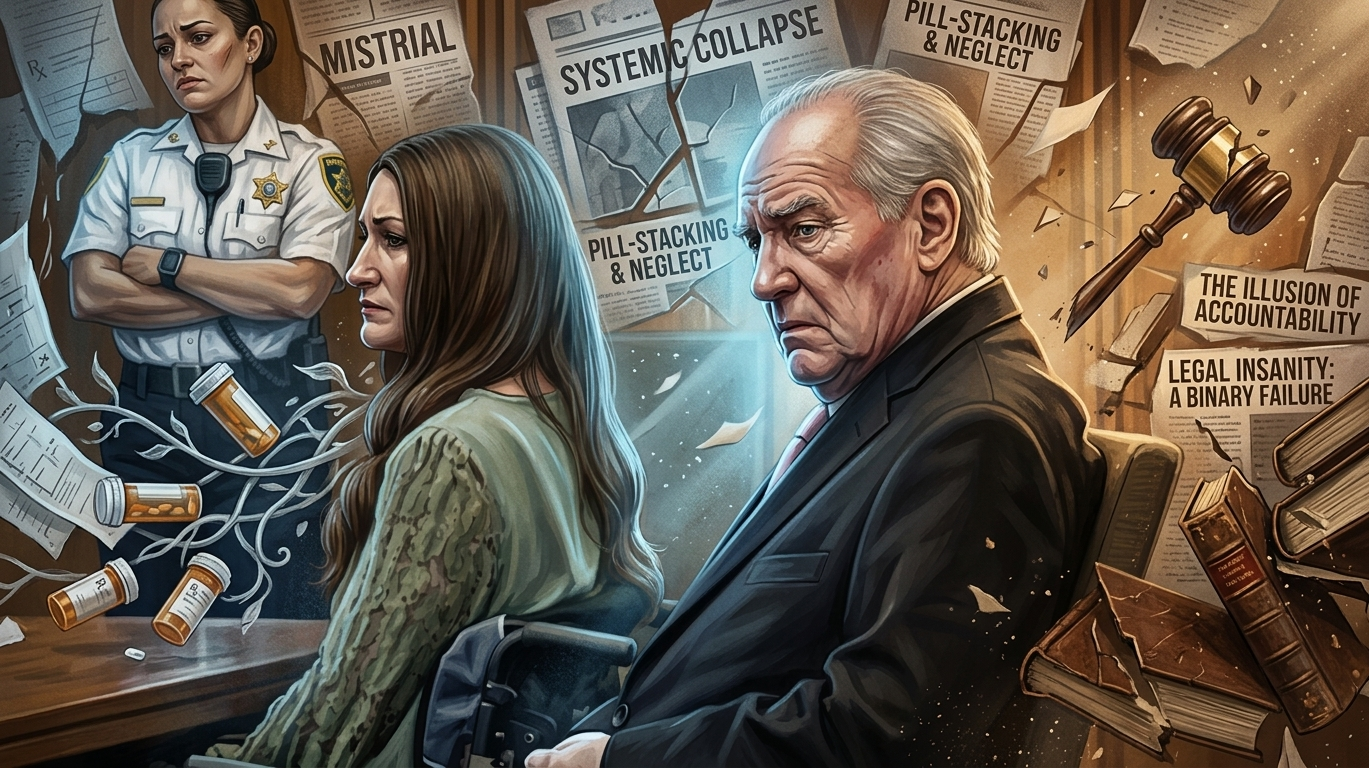
When you think about Cora, Dawson, and Callan Clancy now, you might picture a courtroom in deadlock. Three months of evidence. Weeks of jury deliberations hanging on points of expert testimony. Eleven jurors who wanted to find Lindsay Clancy innocent. One holdout juror. A verdict that wasn’t reached.
Think about how divided this country is over one question: Who do we blame when the worst happens?
The Commonwealth reduced this case to decisions, intent, and consequences. They showed clips of Clancy looking up bus schedules and sending her husband to the store to prove she knew better than to keep her children alive. Accountability for the state looked like a first-degree murder conviction.
But treating this as solely a criminal case of individual evil meant ignoring how we failed this family as a society. Accountability is understanding how institutional structures failed to protect three children from a mother who wasn’t just “distressed”, who had a serious, documented psychiatric emergency.
The trial documents don’t paint a picture of a mother secretly scheming to hurt her children. They show a woman buried in crippling postpartum depression and psychosis reaching out for help. In the year before January 2023, Lindsay Clancy voluntarily admitted herself to the psych ward, wrote about “brain fog” and feeling “detached from myself” in her medical records, and was prescribed dozens of high-powered psychiatric medications, antidepressants, antipsychotics, benzodiazepines in quick succession.
Accountability means asking why our healthcare system sees dragging patients through months of mental health counseling as a good alternative to stabilization inpatient units where patients are monitored 24/7. When someone suffering from a postpartum mental health emergency is offered only cursory evaluations by clinicians as they cycle through a combination of powerful psychiatric drugs, doctors can’t claim they did everything they could.
It also means asking why our justice system sets mothers up to fail. Lindsay Clancy was evaluated under Massachusetts’s McHoul standard for criminal insanity, a test that relies on 19th-century understandings of consciousness and volition. Neuroscientists have known for decades that you can have severe psychosis without appearing confused about your surroundings. Someone guided by command hallucinations or feeling completely “checked out” from their life can brush their teeth, get dressed, and feed their children on autopilot while remaining entirely delusional. We expect jurors without any expertise in neuroscience or mental health to parse these nuances through an either/or test written centuries ago.
Prosecutors didn’t seek justice. They pursued the maximum sentence they could against a mother who fell out of a second-story window in a suicide attempt, now paralyzed from the waist down. Criminalizing mothers of young children who actively seek help during perinatal mental health emergencies and then blame their newborn for their condition guarantees more tragedies like this.
Accountability starts by transforming this loss into action. By reforming the medical system and courthouse doors that couldn’t or wouldn’t protect mothers and babies until it was too late:
Revolutionize Maternal Healthcare:
Stop pretending hospital-based evaluation followed by outpatient medication management without wraparound services is “mental health care” for new mothers. Mandate clinical pathways for Postpartum Psychosis and create Mother-Baby Inpatient Units—which have been around in Europe for decades—that keep mothers and newborns safe while providing intensive care and monitoring 24/7. Deprescribing or “pill-stacking” powerful psychotropic drugs should require flag hearings within hospital pharmacovigilance committees.
Stop Prosecuting Mental Illness:
State legislatures should repeal binary sanity tests like McHoul and others inherited from British common law. Congress can and should create a nation-wide standard for perinatal mental health akin to infanticide laws in the UK and Canada that channel cases into psychiatric treatment and long-term commitment where appropriate, not prison.